Joy Organics THC-Free Broad-Spectrum CBD: Is It Really THC-Free?
“THC-free” sounds simple: no THC in the bottle. In practice, it is a claim that needs context. Exactly.. A finished CBD product may test with no detectable THC in one laboratory analysis, but that does not automatically mean every batch contains absolutely zero THC—or that using it carries no risk of a positive drug test.
Joy Organics markets some products as THC-free broad-spectrum CBD. To judge that claim, look beyond the front label. The useful evidence is a batch-specific COA—a certificate of analysis, or lab report, tied to the exact batch you bought—along with details about how the hemp extract is tested and refined.
This guide explains what broad-spectrum means, how it differs from full-spectrum CBD and isolate, what lab results can and cannot tell you, and why shoppers concerned about drug testing should be especially careful. One practical note: the scraped article provided no product prices. Prices vary by product, size, retailer and promotion, so this guide does not guess at them; check Joy Organics or the seller for current pricing.
What “THC-free” means on a CBD label
THC is short for tetrahydrocannabinol, the cannabis compound best known for producing intoxicating effects. In hemp-derived CBD products, the amount and type of THC can vary depending on the plant material, extraction process and later refinement.
On a product label, “THC-free” is a marketing phrase, not a guarantee that a bottle contains literally zero THC molecules. Let me tell you about a situation I encountered was shocked by the final bill.. A lab can report that THC is “not detected,” which means the amount is below that test’s detection threshold. The threshold matters: a test cannot rule out amounts smaller than it can reliably measure.
For a Joy Organics THC-free product, the best question is therefore not just, “Does the label say THC-free?” Ask: Does the COA for this exact batch show THC as not detected, and does it identify the method and reporting limit?
Broad-spectrum vs. full-spectrum vs. isolate
These terms describe the kinds of hemp compounds a CBD extract is intended to contain. They can help you compare products, but they are not a substitute for reading the ingredient list and lab report.
Type What it generally contains What to know about THC Broad-spectrum CBD CBD plus some other hemp compounds, such as minor cannabinoids or terpenes, depending on the formula THC is intended to be removed or reduced to non-detectable levels, but verify the batch report Full-spectrum CBD CBD and other hemp compounds, including naturally occurring THC within applicable legal limits Contains THC by design; not the choice for someone seeking to avoid THC entirely CBD isolate CBD separated from most other hemp compounds Usually intended to contain only CBD, but check the COA for THC and other cannabinoid resultsWhat broad-spectrum means in everyday terms
Broad-spectrum is often described as a middle ground: more hemp compounds than CBD isolate, but with THC removed or reduced. The exact mix is not universal. One brand’s broad-spectrum extract may have a different cannabinoid profile from another’s, so the term alone does not tell you what is in a particular bottle.
What people mean by the “entourage effect”
The entourage effect is the idea that cannabis compounds may work differently together than they do individually. In plain English, it is a proposed “team effect” among cannabinoids and other plant compounds. It remains an area of scientific study; it should not be presented as proof that a broad-spectrum product works better than isolate or treats a health condition.
How to check whether a Joy Organics THC-free product is supported by evidence
A label claim is a starting point. A transparent, batch-specific COA gives you a way to check what an independent lab measured in a particular production run. Follow these steps before buying or using a product.
- Find the batch or lot number. Look on the bottle, box or package. If there is no clear batch number, ask the company or retailer how to locate the relevant report.
- Open the matching COA. The report should identify the product and batch, not simply show a generic sample report or a report for another product.
- Check the cannabinoid panel. Look for CBD and THC results. THC may be listed as delta-9 THC, delta-9-THC, or under a broader cannabinoid panel. If the report lists only CBD, it does not answer the THC question.
- Read the result and its limit. “ND” or “not detected” means the result fell below the lab’s detection or reporting limit. It does not mean a lab proved there are no molecules at all. Look for the limit of quantitation or detection, if shown.
- Check the date and laboratory details. A report should identify the testing lab, sample date and report date. Look for enough information to verify that the lab and test are real, rather than relying on a graphic that only says “third-party tested.”
- Review other safety testing. Depending on the product and testing program, reports may include screening for pesticides, heavy metals, residual solvents, microbes or mycotoxins. A cannabinoid panel alone does not show that all these contaminants were tested.
A batch-specific COA is useful because hemp extracts and finished products can vary from batch to batch. It is not a lifetime guarantee for a brand or every bottle on a shelf. Match the report to the lot number in your hand.
Why refinement steps matter
To make broad-spectrum extract, manufacturers typically start with hemp extract and use additional processing to separate or reduce selected compounds, including THC. Methods can include filtration, distillation or other refinement techniques. The specific process varies, and a consumer should not assume that every brand uses the same steps—or that a particular technique guarantees a THC-free result.
Refinement can change the extract’s composition. That is why a company’s description of its process is helpful, but it is not a replacement for finished-product testing. The practical evidence is a current lab report for the final product and its specific batch. If the company discusses “THC removal,” ask whether it tests the finished formula after refinement, rather than relying only on a test of the incoming hemp material.
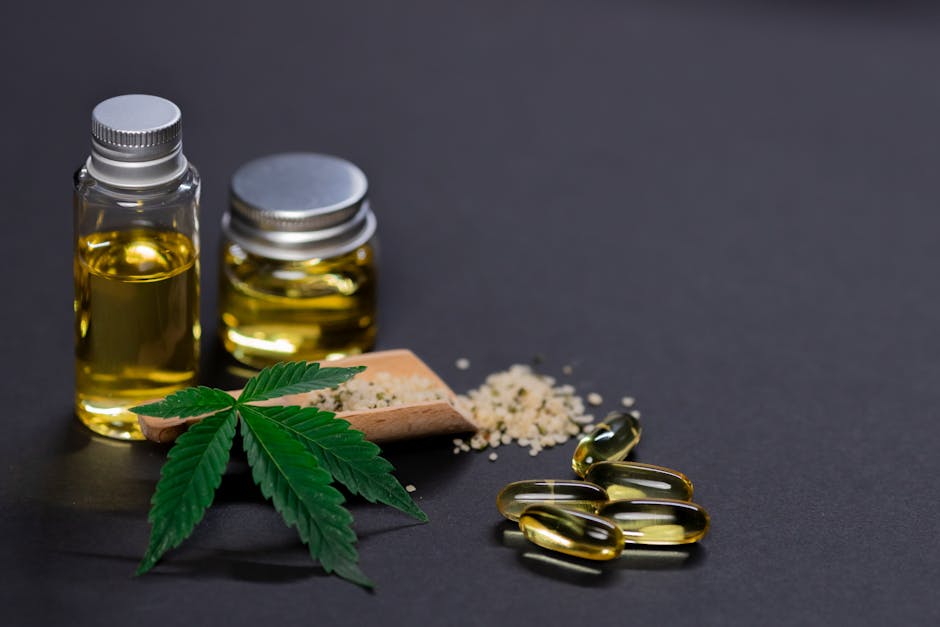
Also note that an ingredient such as “broad-spectrum hemp extract” does not itself tell you the exact THC concentration. The COA should be the place where that result is documented.
THC-free products and drug testing: understand the remaining risk
People often choose broad-spectrum CBD because they want to avoid THC, including people subject to workplace, athletic or other drug testing. That is understandable, but “THC-free” on a label should not be treated as a promise of a negative test.
Drug tests generally look for THC or its metabolites, not for CBD itself. A broad-spectrum product that tests non-detect for THC may lower the chance of exposure compared with a full-spectrum product, but several uncertainties remain: the lab’s detection limits, batch variation, product handling, and the possibility of trace THC or inaccurate labeling. A consumer report from one batch cannot establish that every future batch is identical.
- If a positive drug test would have serious consequences, the most cautious choice is to avoid CBD and other hemp-derived cannabinoid products unless your testing authority or clinician gives you specific guidance.
- Do not rely on a “THC-free” headline alone. Check the batch-matched COA and confirm that THC is included in the testing panel.
- Ask the employer, sports organization or testing program about its rules. Policies and test procedures differ.
- Keep the product label and COA, but understand that documentation does not guarantee a particular test outcome.
There is no responsible way to promise that a broad-spectrum CBD product will never contribute to a positive test. Anyone who says otherwise is overstating what product testing can prove.
Why THC-free CBD became a bigger retail category
Ask yourself this: cbd products moved into mainstream retail after the 2018 farm bill changed the federal framework for hemp. The law removed hemp—defined in federal law using a delta-9 THC threshold—from the federal definition of marijuana. It helped expand access to hemp-derived ingredients and encouraged more brands to enter the market.
That shift did not mean every CBD product was automatically approved, legal in every place or proven effective for every advertised use. State rules, product type and other federal requirements still matter. The growth of the category also made clearer labeling and reliable testing more important, especially for consumers who want CBD but want to avoid THC.
Broad-spectrum products appeal to some shoppers because they are marketed as containing multiple hemp compounds while removing THC. Whether that trade-off suits you depends on your preferences, the product’s actual lab results and your tolerance for drug-testing uncertainty.
What the missing price information means
The scraped article did not list product prices. That omission makes it impossible to compare value fairly, and adding a number without checking a current listing would risk misleading readers. Joy Organics prices may differ by product format, bottle size, retailer and sale. Confirm the current price directly before checkout, then compare the cost per serving—not just the cost per bottle.
When comparing products, also check the amount of CBD per container, the suggested serving size, ingredients and return policy. A lower sticker price does not necessarily mean a lower cost https://www.bocaratontribune.com/bocaratonnews/2026/09/how-thc-free-cbd-products-became-a-mainstream-wellness-choice/ per serving, and price alone says nothing about the quality of testing.
Bottom line: Is Joy Organics THC-free broad-spectrum really THC-free?
The careful answer is: a particular Joy Organics broad-spectrum batch may test with no detectable THC, but the label alone cannot prove that. Look up the COA for the exact batch, confirm that the report includes THC, and read the lab’s detection or reporting limit. Ideally, the company also explains how it refines the extract and tests the finished product after processing.
That evidence can support a “THC-free” claim in the practical sense of THC being below the lab’s stated threshold. It cannot establish absolute zero, guarantee every batch, or eliminate drug-testing risk. If you need to avoid THC for work, sport or another high-stakes reason, treat any hemp-derived product as a potential risk and get guidance from the relevant testing program.
Quick buyer checklist
- Does the label clearly identify the product as broad-spectrum?
- Can you match the bottle’s lot number to a batch-specific COA?
- Does the COA report THC, and is the result non-detect with a stated limit?
- Does the company describe testing of the finished product after refinement?
- Does the report include relevant contaminant testing as well as cannabinoids?
- Have you checked current pricing and calculated cost per serving?
- Could even a small amount of THC create a problem for your drug-testing situation?
For shoppers considering Joy Organics THC-free broad-spectrum, the best habit is simple: check the bottle, match the batch, read the lab report and keep expectations realistic. That takes a few minutes—and gives you more useful information than a bold claim on the front label.